|
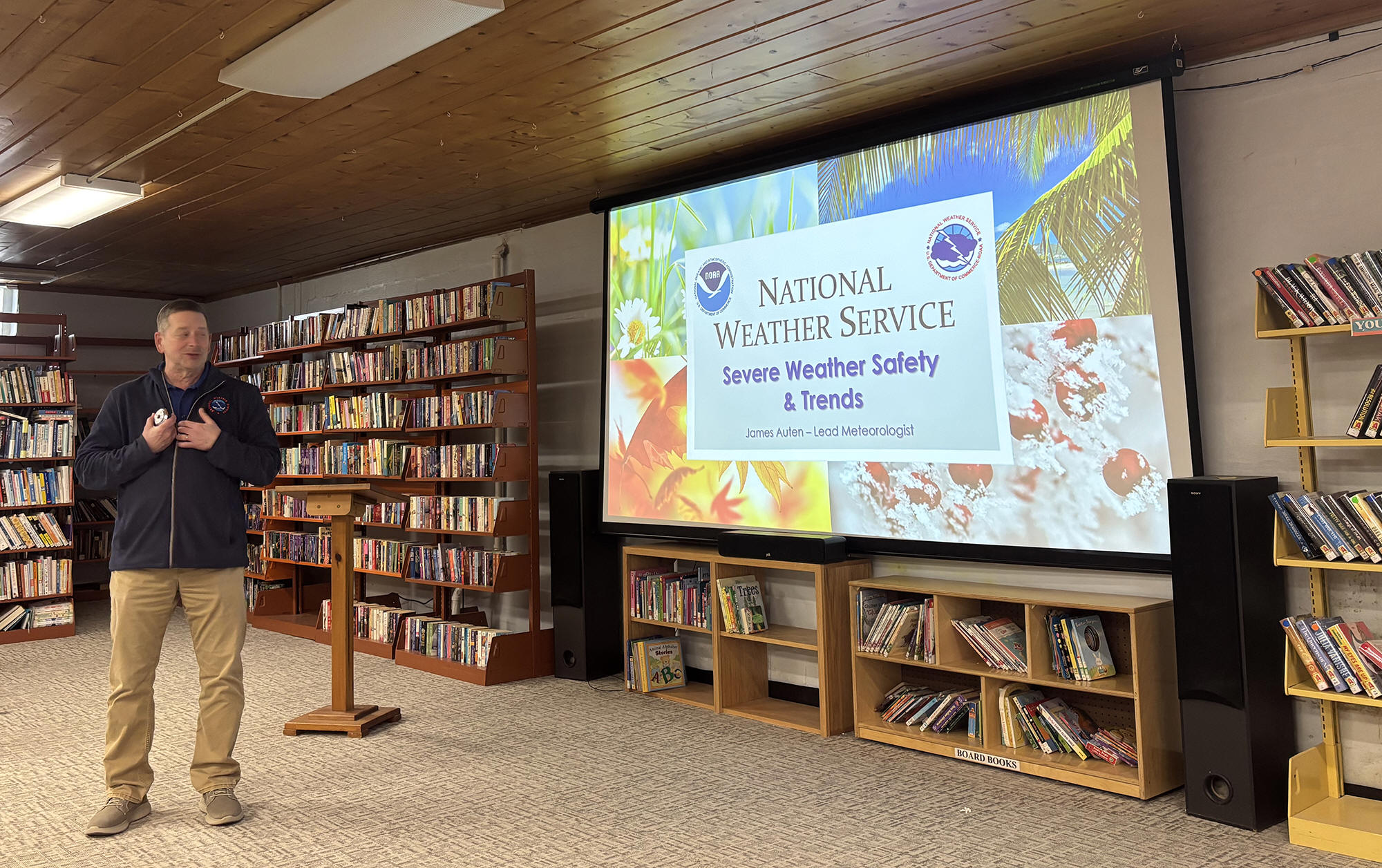
On March 24, 2026, James Auten,
Lead Meteorologist for the National Weather Service in Lincoln,
presented on the topic of severe weather safety and trends at Mt.
Pulaski Public Library.
Since it is springtime in Central Illinois, Auten focused on severe
weather that occurs in the spring and summer. He began his
presentation with the leading cause of severe-weather fatalities:
heat. On average, Illinois sees 24 days per year that reach 90
degrees or above. Males between the ages of 70 and 90 are at higher
risk for heat-related death. Auten’s tips for avoiding heat-related
illness or death included: slowing down and lowering stress,
dressing in lightweight, light-colored clothing, remaining in
air-conditioned buildings, staying out of the sun, and preventing
dehydration by avoiding sugary drinks and soda.
Flash flooding is the second deadliest weather event. Most flash
flooding occurs between May and July. Auten explained that only 6-12
inches of water is needed to wash away a small vehicle, while 18-24
inches would endanger larger vehicles like SUVs, vans, and trucks.
To stay safe in the event of flash flooding, never walk or drive
through water, as it can lift a vehicle, and be familiar with areas
that flood.
Following his discussion on flooding, Auten then focused the
remainder of the program on lightning and tornadoes. Illinois is
currently ranked seventh in the U.S. for lightning strikes per
square mile; Florida is first. Some safety tips when lightning
occurs include going indoors, avoiding trees, and if driving, remain
in your vehicle with the doors and windows closed. If you are
outdoors when lightning occurs, it is best to remember “When the
thunder roars, go indoors.” However, if that is not possible, Auten
advised the audience to crouch rather than lie flat on the ground.
Continuing with the severe weather
themes, the last topic, tornadoes, was of most interest to the
audience. Auten advised that Tornado Alley is shifting away from the
Great Plains towards the Southeast and Midwest, including the
Mississippi Valley.

[to top of second column] |

While tornadoes
can occur in any month and at any time of day, they are most
common in the spring and early summer months of April through
June, and 30 percent occur at night. Some of the increase in
tornadic activity is attributed to greater reporting as more
people can record and document them on their phones. Auten
informed the audience that while the National Weather Service
has observed a decrease in the overall number of active tornado
days, there has been an increase in concentrated,
high-intensity, clustered outbreaks. He also mentioned an uptick
in tornadoes occurring in the winter months.
To stay safe during a tornado, it is important to receive
warnings and severe weather notifications. While many people
receive notifications on their phones, Auten explained the
importance of having a weather radio with battery backup and of
monitoring the radio and TV for storm alerts. Once aware of a
storm, one should seek shelter indoors on the lowest floor and
away from windows. If outdoors and unable to seek shelter, lie
flat in a ditch and do not remain in a vehicle, as it can be
thrown or rolled in the storm.
Auten stresses the need to create a plan and practice with your
family to prepare everyone for severe weather. For more
information, visit
weather.gov/Lincoln.
[Joli Boerma] |