|
The June 2026 Logan County
Genealogical and Historical Society program was “Collections”, with
several sharing a select few items from their personal collections
from home. Those who brought something shared the history of the
items and where they got them.
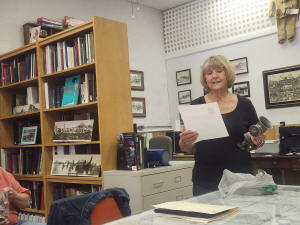
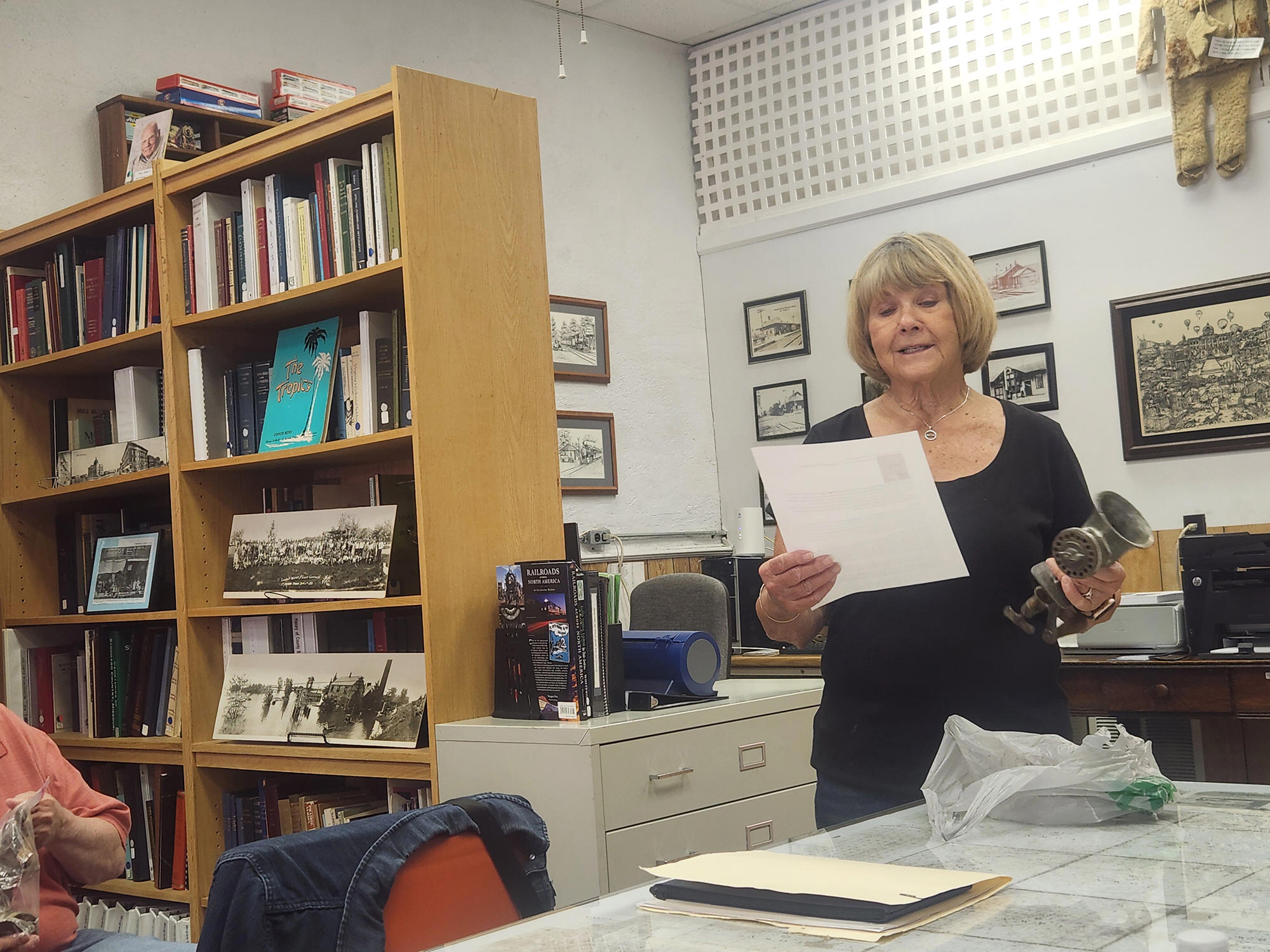
Diane Farmer brought her meat
grinder that originally belonged to her mother and maybe even her
grandmother. She said it was vintage rather than antique. While
grinders are often used for rustic antique kitchen displays, antique
technically applies to items over 100 years old and vintage refers
to something 20 to 99 years old. Most cast iron grinders date from
the mid twentieth century. Meat grinders were a hand cranked device
that forced meat through a plate for sausages and later became a
staple kitchen tool for processing various foods. Commonly known as
a meat mincer in Ireland, Farmer said it is used to chop meat into
fine pieces and can also be used for vegetables. Different “plates”
used in the grinder make various sizes of meat.
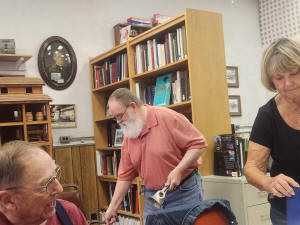
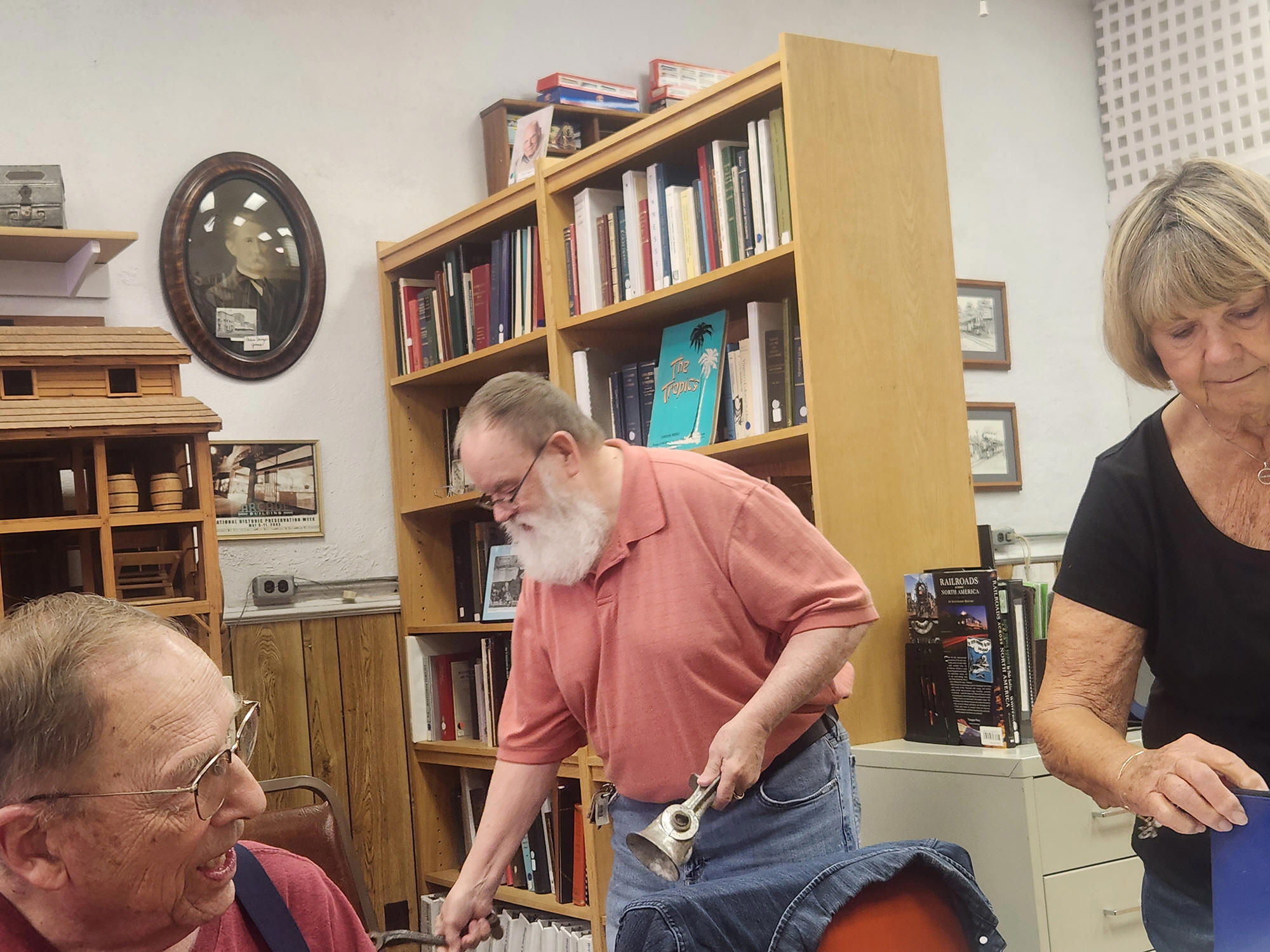
Galen Wickline brought a similar
meat grinder made by the CI Company in Boyertown, Pennsylvania. He
said his family did not really use it for grinding meat but instead
used it to grind cranberries for cranberry salad and for quartering
oranges. A lot of good dinners were made using the grinder.
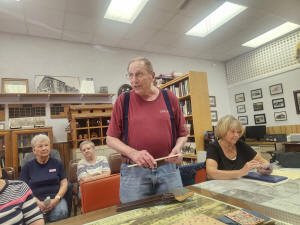
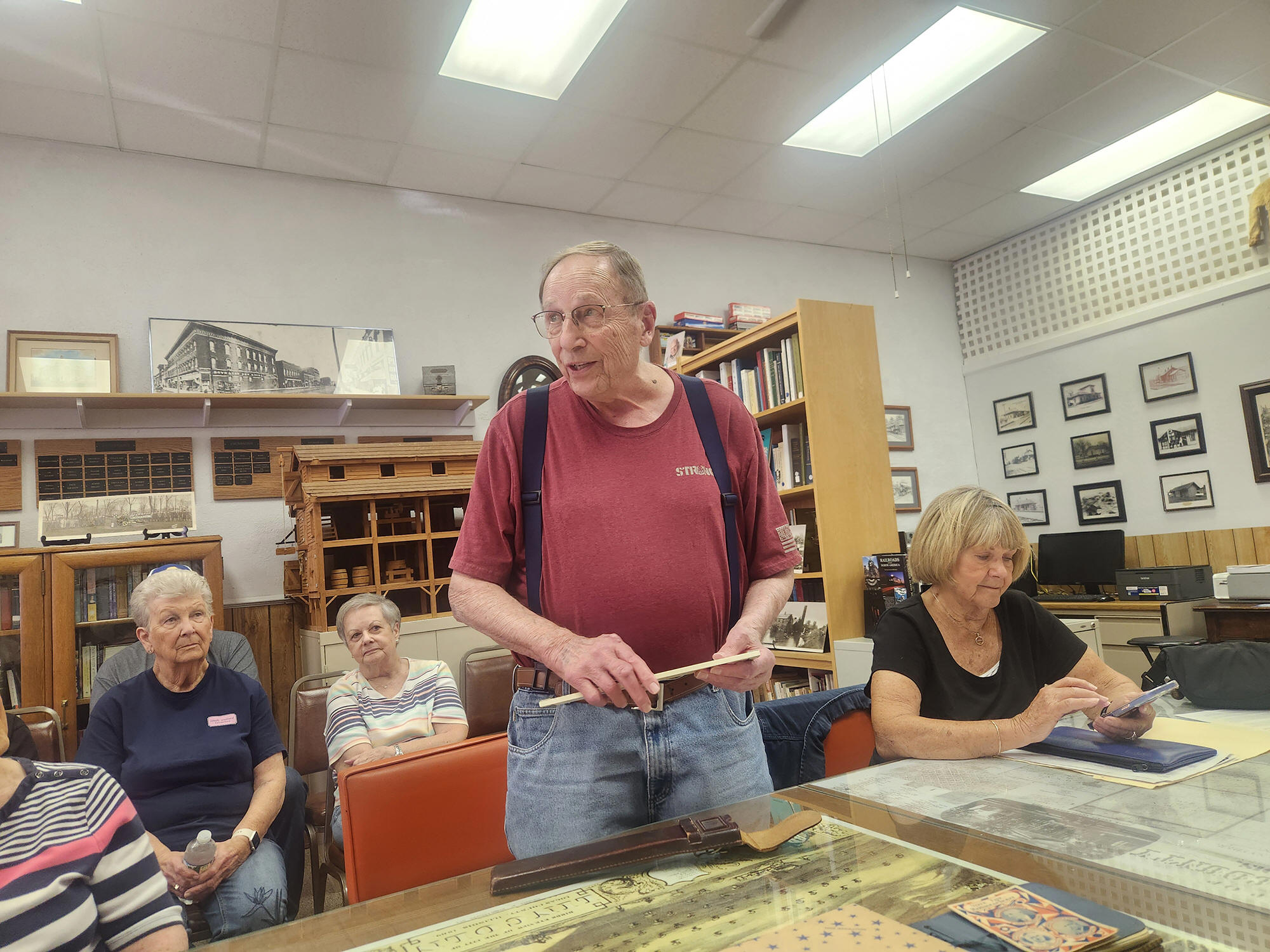
Gary Frieze had a leather case
everyone thought held a knife but actually contained a slide rule he
used in college when he majored in Engineering. Because the slide
rule was made from bamboo, Frieze said every once in a while, he had
to put powder in it to make sure it slid. Those studying engineering
before calculators were used would hook the slide rule case on their
belt. During exams they were able to use the slide rule for
multiplying and dividing.
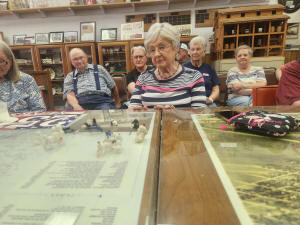
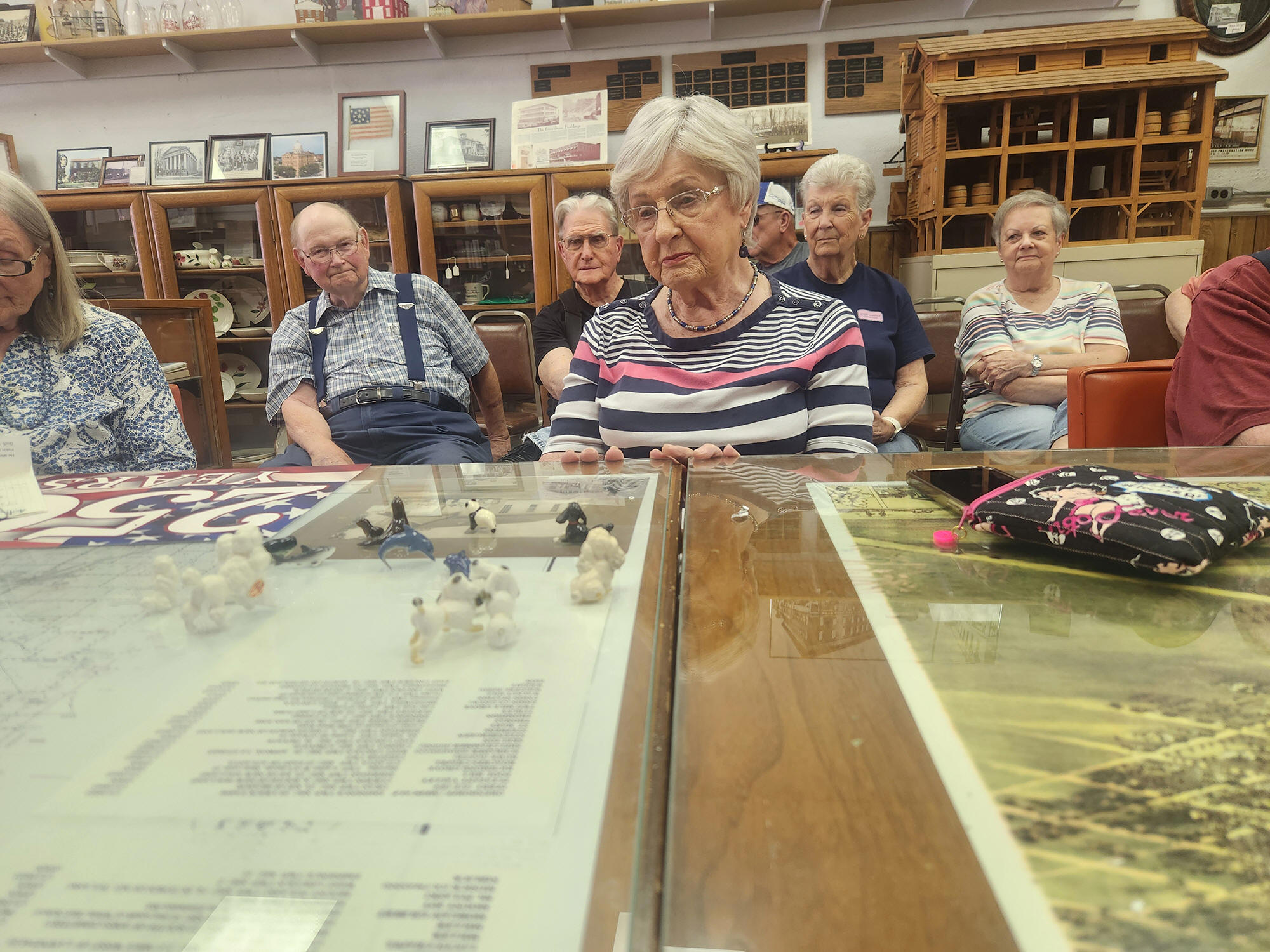
The items Patricia Birk brought are
part of a very unique collection her father-in-law had. His
collection was tiny hand painted animals made in Japan out of bone
China. She said all he wanted for his birthdays and Christmas were
these little pieces. To him, the smaller they were, the better. When
her father-in-law died, most of his collection was donated to the
Masonic home in Sullivan where they are displayed in several cases.
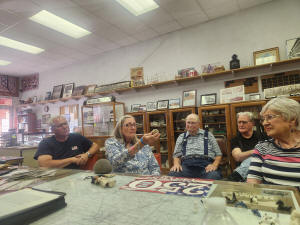
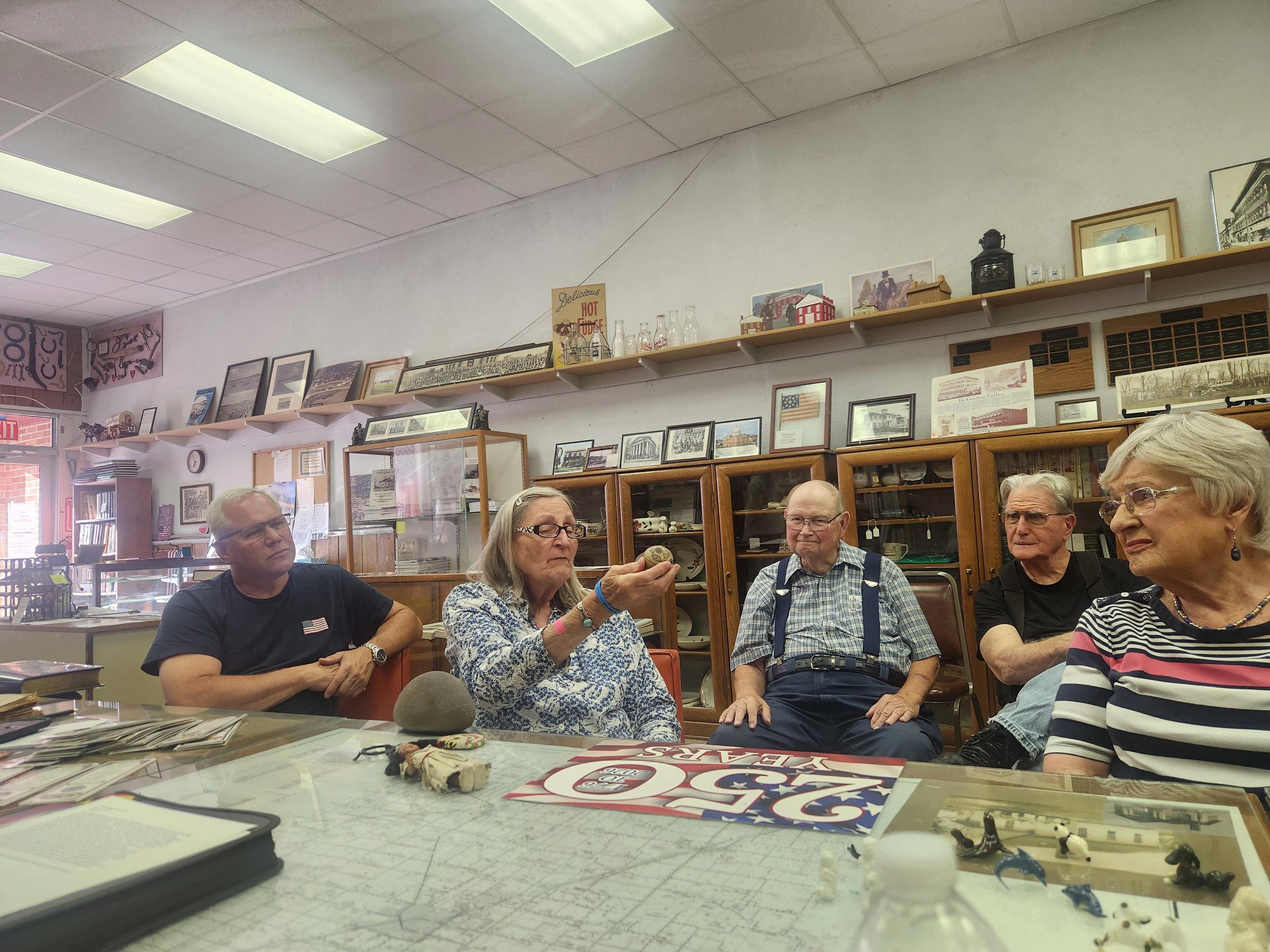
The collection Abbie Alexander showed contained Native American
rocks and other Native American items. She started a collection when
she was in second grade and a neighbor boy who was moving away
brought her a rock. His grandfather had given him bushel baskets
full of Native American artifacts like arrowheads. Because the
Allied Van Line would weigh and charge by the pound for everything,
Alexander said the boy’s mother would not let him take the baskets.
Other Alexander also brought her mother’s suede coin purse with
Native American beadwork, a doll she bought in Bemidji, Minnesota
and a bracelet her mother bought in Oklahoma.
[to top of second column] |

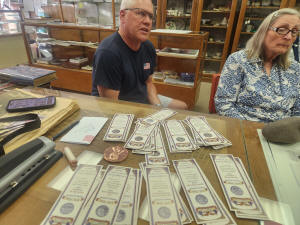
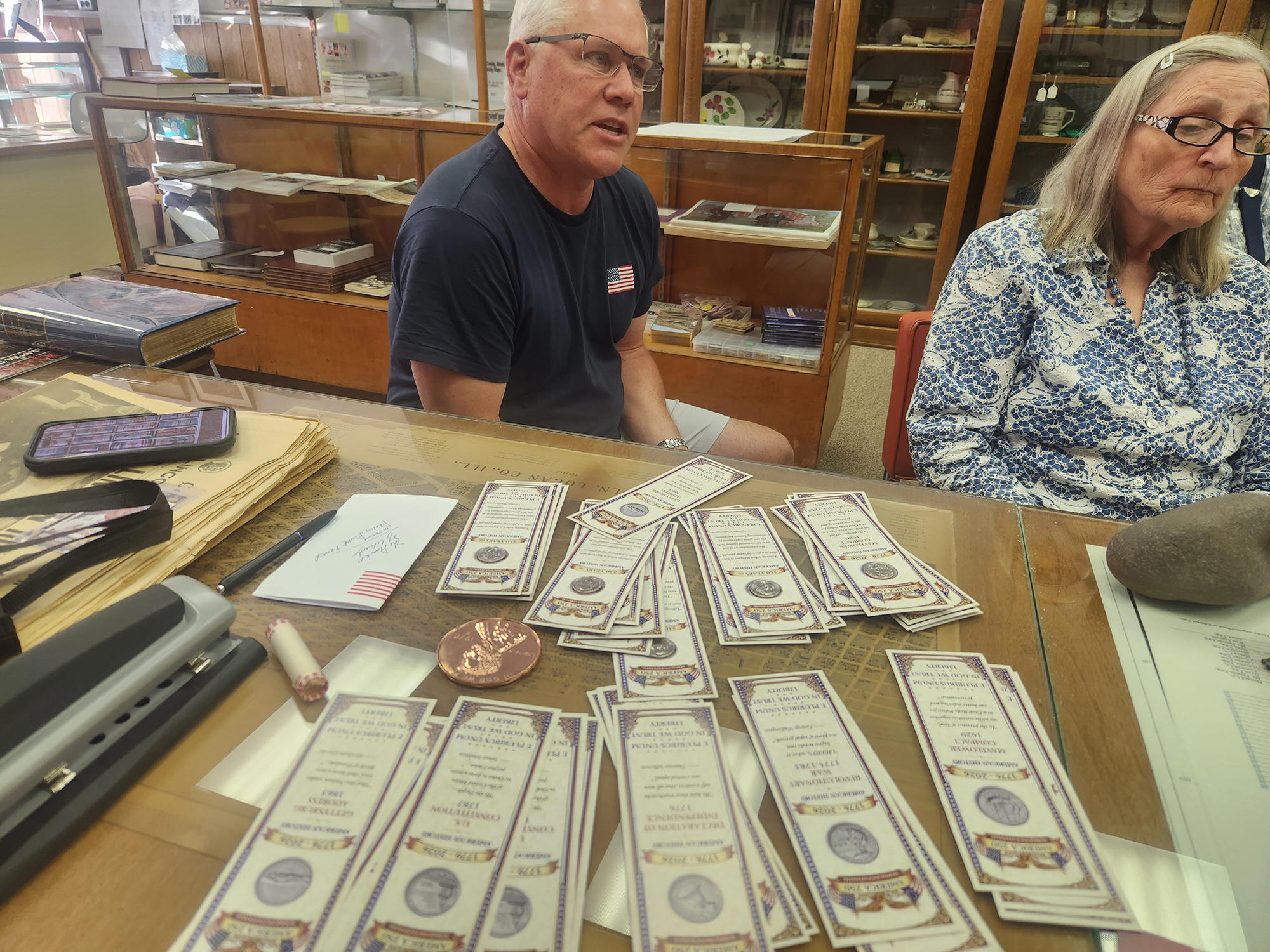
Blake Wilson, who lives in
Colorado, but has family in the area, shared his collection of
special coins minted for America’s 250th birthday. Five different
quarters represent events such as the Mayflower Compact, the
Revolutionary War, the Declaration of Independence, the U.S.
Constitution and the Gettysburg Address are being minted. These
coins are on bookmarks and have quotes by people such as George
Washington plus a list several important dates in America’s history.
Wilson lives near the Denver Mint and often buys coins there. When
the presidential dollars came out, he bought a bag of 1000 at the
mint. Recently, Wilson bought two Illinois dollar coins from there
and passed them around to show. Besides coins, Wilson collects rocks
from every stream or river where he goes fly fishing and has a
collection of over 100 vintage beer cans from the 40s, 50s, 60s and
70s. He feels collections give us energy in our lives.
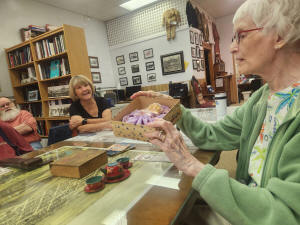
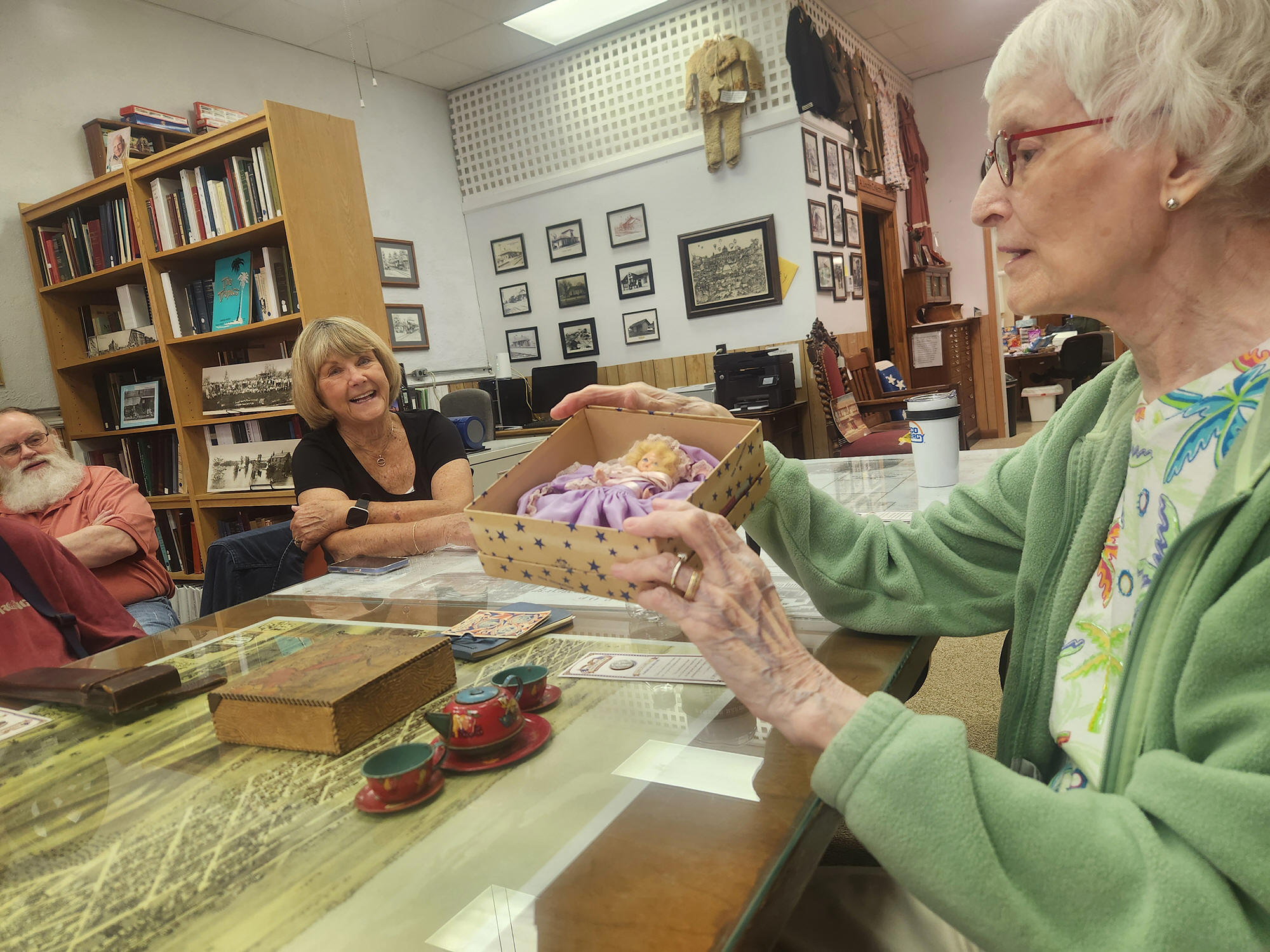
Ruby Nimke showed several items
including her mother’s wood burned box to hold handkerchiefs, a doll
she won at a birthday party, a miniature Donald Duck tea set and a
card encouraging people to vote Republican for Herbert Hoover and
other officials on the ticket. She had an autograph book from 1927
when her mother was a student at Illinois State Normal University.
Nimke read some of the messages her mother’s classmates wrote in it
that often referred to classes they were in together, wished her
luck or asked her to remember them as a link in her gold chain of
friendship.
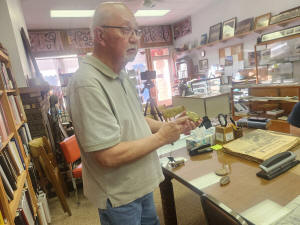
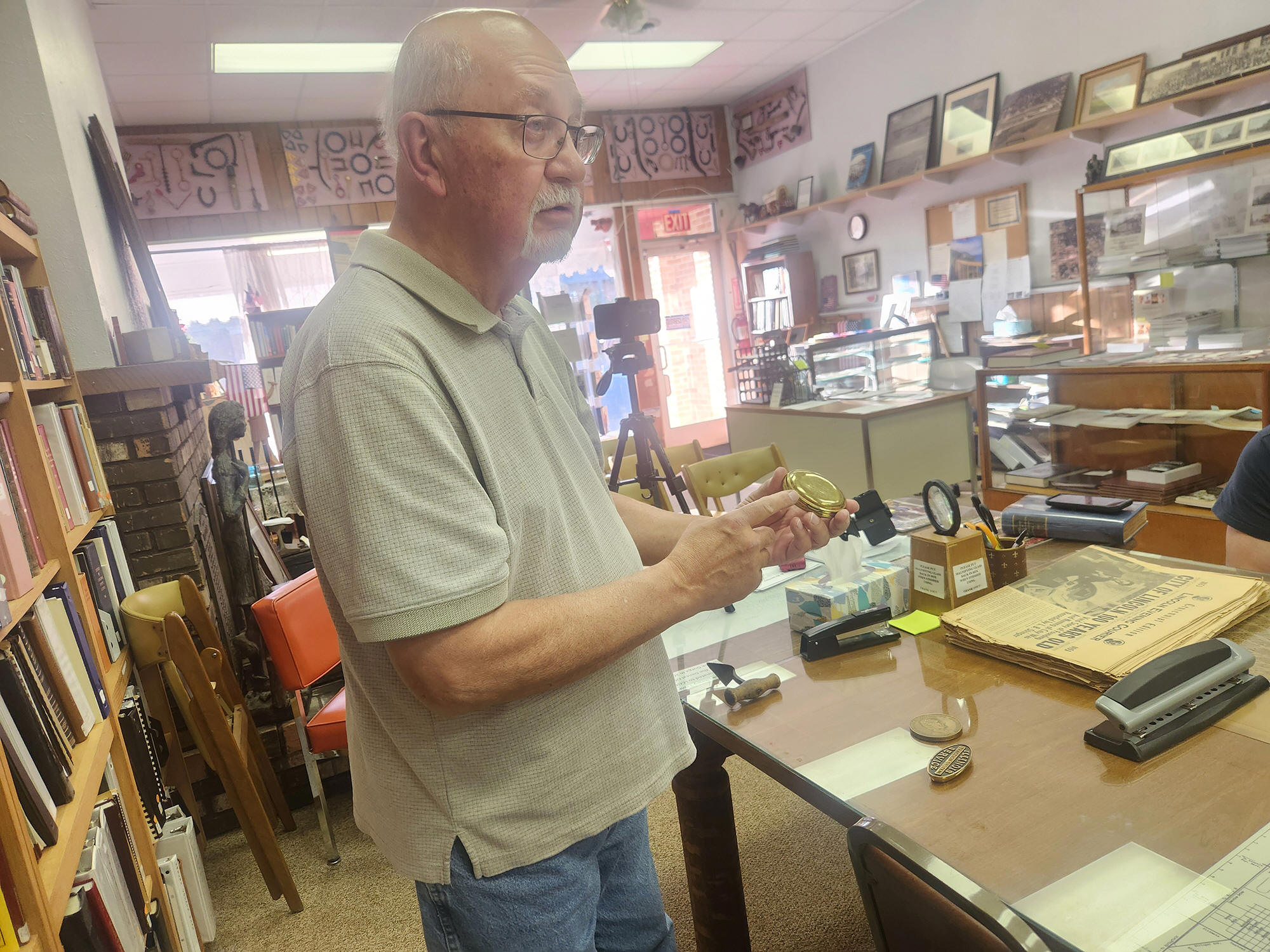
Among the items Bill Donath brought
were a medallion from Lincoln College’s Centennial in 1965, an
Illinois Traction System paperweight and a little brass box made in
1874 that originally belonged to his great grandmother. His father
kept the box in his fishing box and stored fishhooks in it. Donath
also had an item with a sharp edge he thought was used either for
cutting something or in the kitchen to break apart ungranulated
sugar. Someone looked the item up and found it was actually a
glazier’s putty knife. For Donath, the mystery of the item had been
fascinating.
Though John Durdle did not bring any items, he has several
collections including 100 farm windmills. Durdle has given items
from some of his collections to the Emden Historical Society and
other places, so he can still see them if he wants to. For example,
a school desk he donated is in Emden’s old Bethel School. He also
has a giant music box that once belonged to the Jingling family who
ran the general store in Hopedale. The store owners bought the music
box from the tobacco pouch tags kids would get from their dad and
bring to the store. When he got enough tags, the owner bought the
music box and 26 records. Durdle got his late aunt’s button
collection, which contains around 15,000 buttons, when she died. The
family tried to sell the whole button collection as a group at her
estate auction, but no one wanted to buy all of them.
Next month’s LCGHS meeting will be Monday, July 20 at 6:30 p.m. at
their building on 114 N. Chicago Street in Lincoln. Shelly Klinger
of Middletown will talk about the village’s history.
[Angela Reiners]
 |