|
On Saturday, people from across
Central Illinois visited the National Weather Service Office in
Lincoln. The National Weather Service office was open to the public
for tours. Each tour had approximately 25 visitors. On each tour,
meteorologists welcomed visitors for a walk-through of the facility
and an up-close look at how the office works, how our weather is
predicted, and what they do to keep us safe in Illinois’s
unpredictable weather.
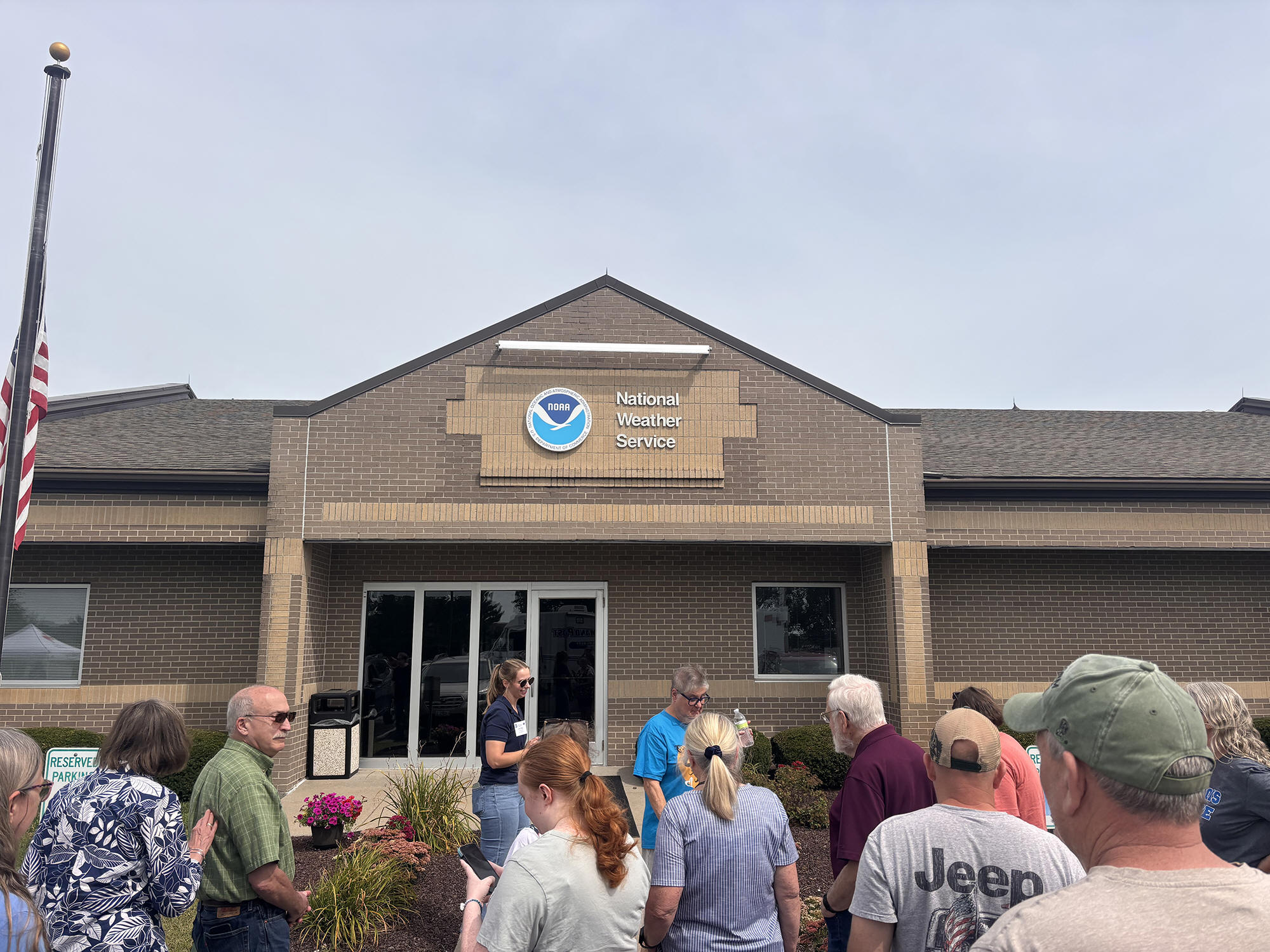
At the front door, visitors could take a picture in front of the
building. Once inside, a short video welcomed guests, and
Meteorologist Nicole gave a brief history of the National Weather
Service. The National Weather Service (NWS) was founded on February
9, 1870, as a branch of the Army, when observers would send weather
observations via telegram to Washington, D.C. The NWS was then
transferred to the Department of Agriculture and eventually became
the U.S. Weather Bureau. After several other transfers, the National
Weather Service was officially renamed in 1970, and the National
Oceanic and Atmospheric Administration was established.
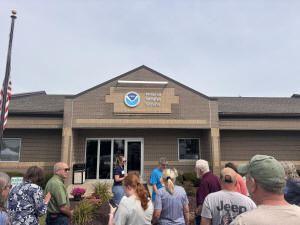
The Lincoln office was built in
1994 and opened in 1995, consolidating the Peoria and Springfield
locations. The Lincoln office serves 35 counties across Central
Illinois from Galesburg to Lawrenceville and Jacksonville to
Danville. They provide information to 5 local airports: Springfield,
Peoria, Bloomington, Decatur, and Champaign. They also provide
hydrologic information for several rivers, most notably the Illinois
River. This office also serves as the state liaison, sending
information packages daily to EMS managers and high-level state
officials. They also noted that they provide information for a range
of outdoor events across the area, and they provide on-site weather
support at the Illinois State Fair. They launch two weather balloons
each day, which collect data for weather prediction. Before moving
on in the tour, one visitor asked what the big dome was outside, and
Nicole explained that it is their radar.

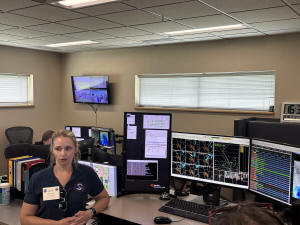
Then, the visitors were welcomed
into the conference room where Meteorologist Nicole explained that
there are 122 weather forecast offices in the United States. She
also passed around a 3D-printed sample of hail to demonstrate the
size of the hail that fell in a storm in the office’s service area
this spring. Along with the 122 forecast offices, she explained that
there are also nine National Centers for Environmental Prediction.
[to top of second column] |

Nicole also explained that the
mission of the National Weather Service is “To provide weather,
water, and climate data, forecasts, warnings, and impact-based
decision support services for the protection of life and
property and enhancement of the national economy.” She also
welcomed a short discussion on the types of weather that we see
in Central Illinois, with many noting the record-breaking year
for tornadoes. They also discussed last year’s early snow and
the increase in dust storms.
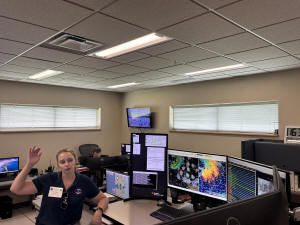
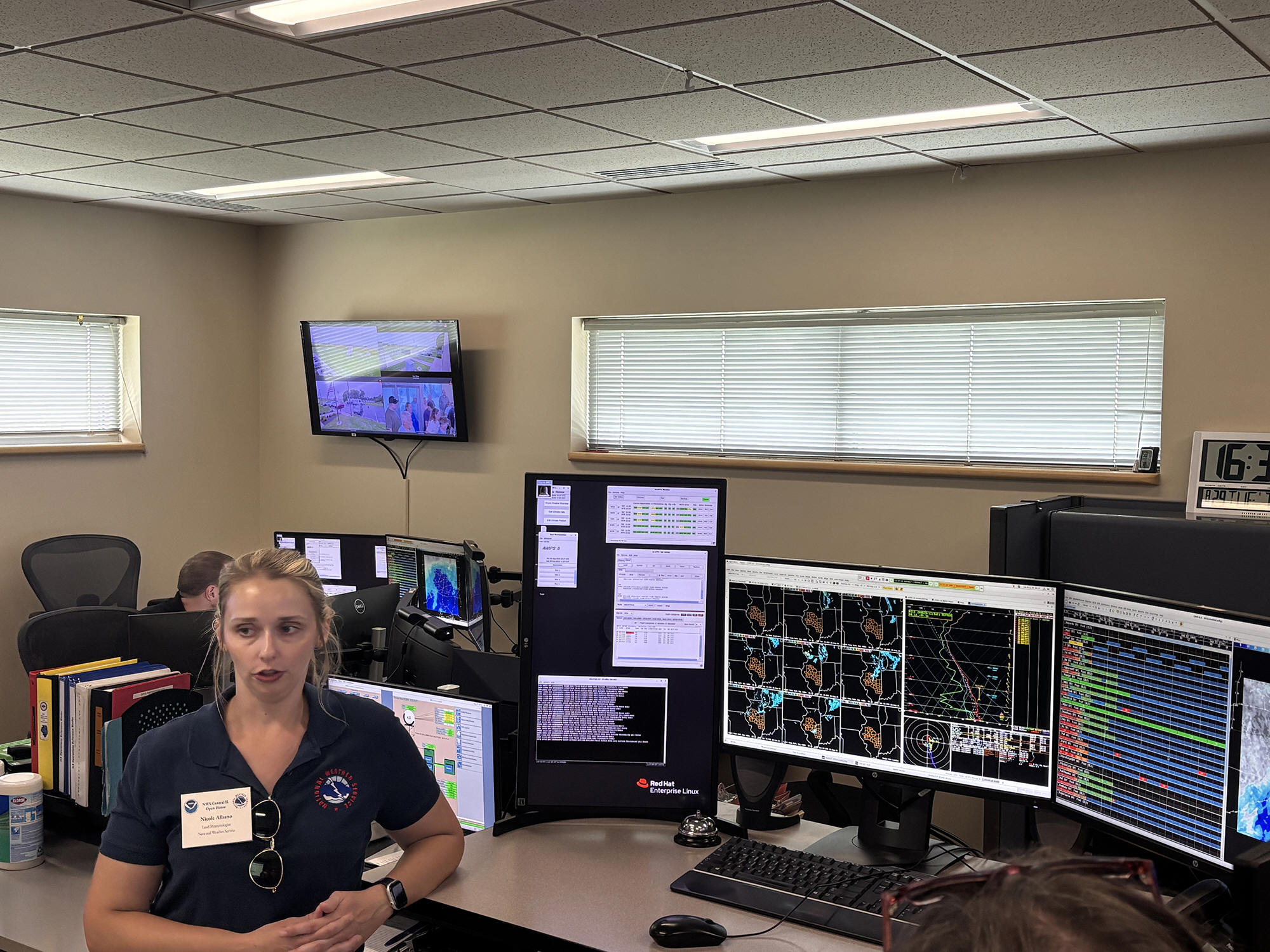
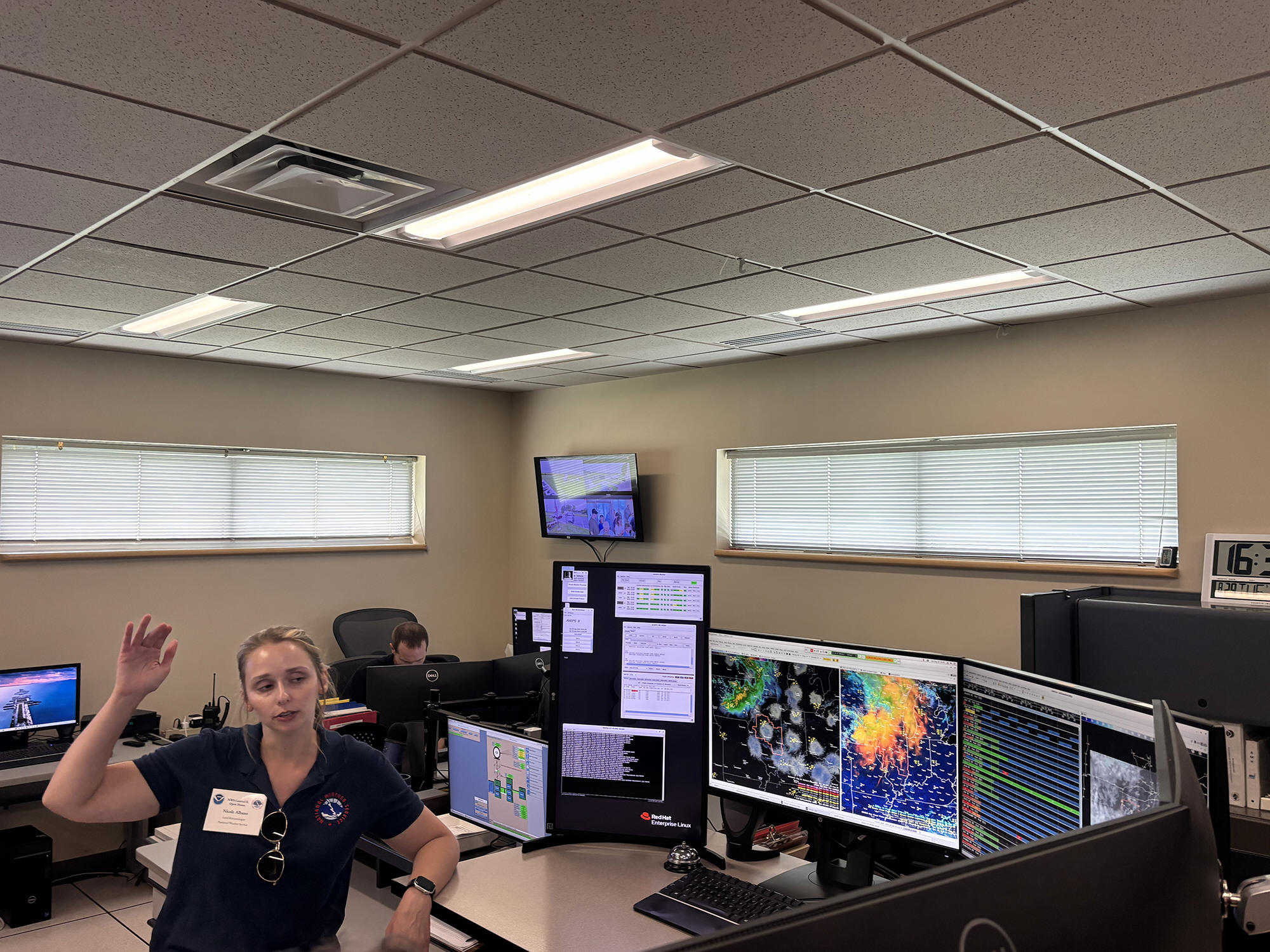
After the short slideshow and
discussion, the tour moved on into the room where most of the action
takes place. The visitors were shown the screens and tools that the
meteorologists use to predict the weather and send out alerts. She
said meteorologists can draft a warning in under a minute, and when
a warning is issued, they ring a bell to alert other staff members.
They also discussed how television meteorologists do not necessarily
match the NWS’s forecast, because they can interpret the data
themselves. Still, they do use NWS information, especially when
warnings and alerts are issued. As the tour continued through the
building, it was noted that a storm shelter is in the middle of the
building so staff can remain safe while continuing to provide
services during severe weather. Outside, Nicole showed the tour the
rain gauge, snow fence, and satellite. Organizations that partner
with the NWS were also on hand with information, as well as Homeland
Security’s Unified Command Post.
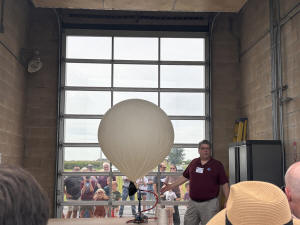
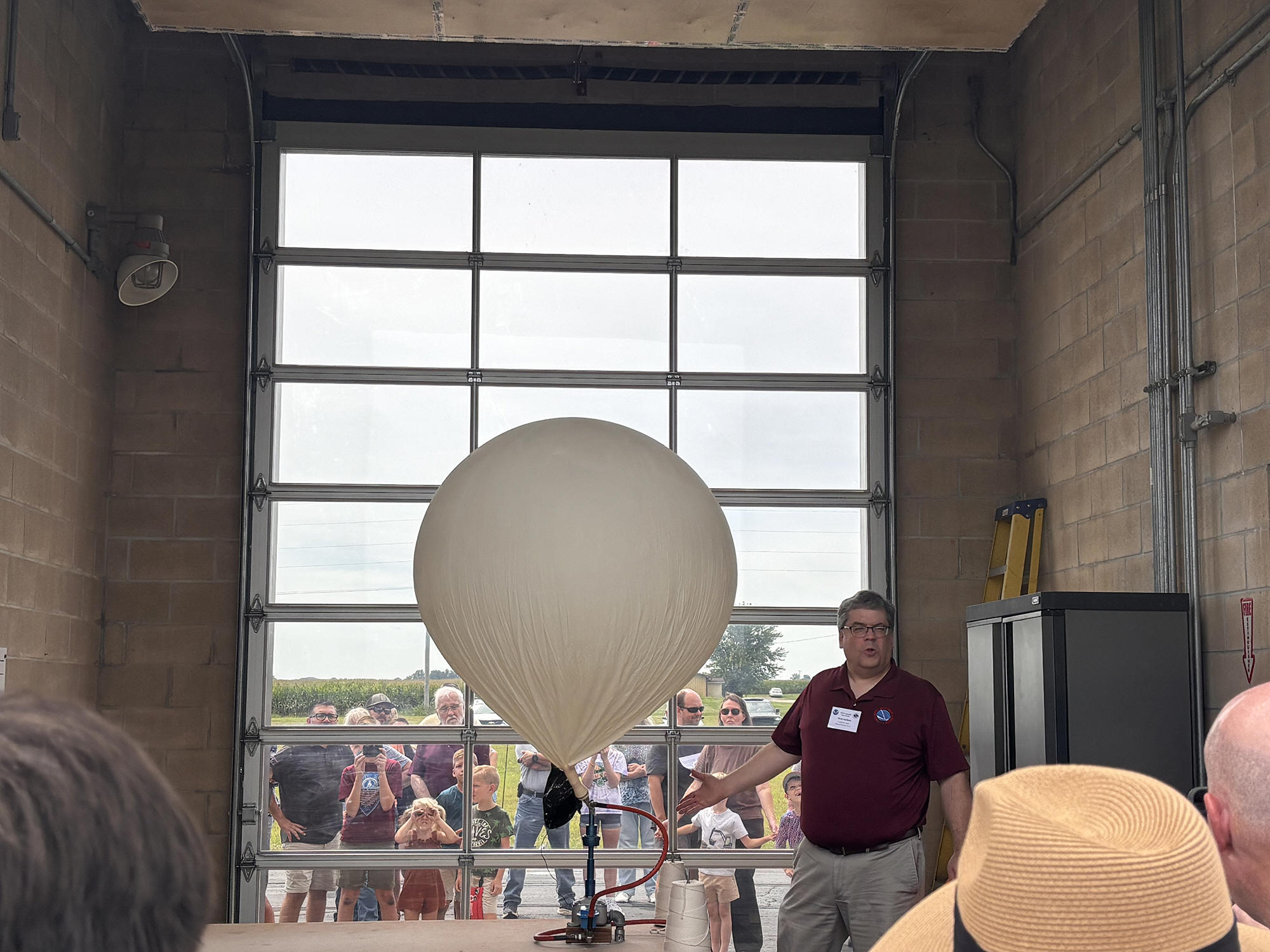
Just after 12:00, one of the
meteorologists provided a detailed explanation and demonstration of
a weather balloon launch. The weather balloon is filled with
hydrogen and tied to a weather instrument and a parachute. It helps
collect data for meteorologists to complete their forecasts. The
guests anxiously waited for the balloon launch, and once it was
ready, the meteorologist cleared a path to the lawn, released the
balloon, and it floated toward the north.
National Weather Service Open House photo slideshow
[Joli Boerma Crane]
|