|
Logan County All Hazards
Mitigation Planning Committee
[April 06, 2026]
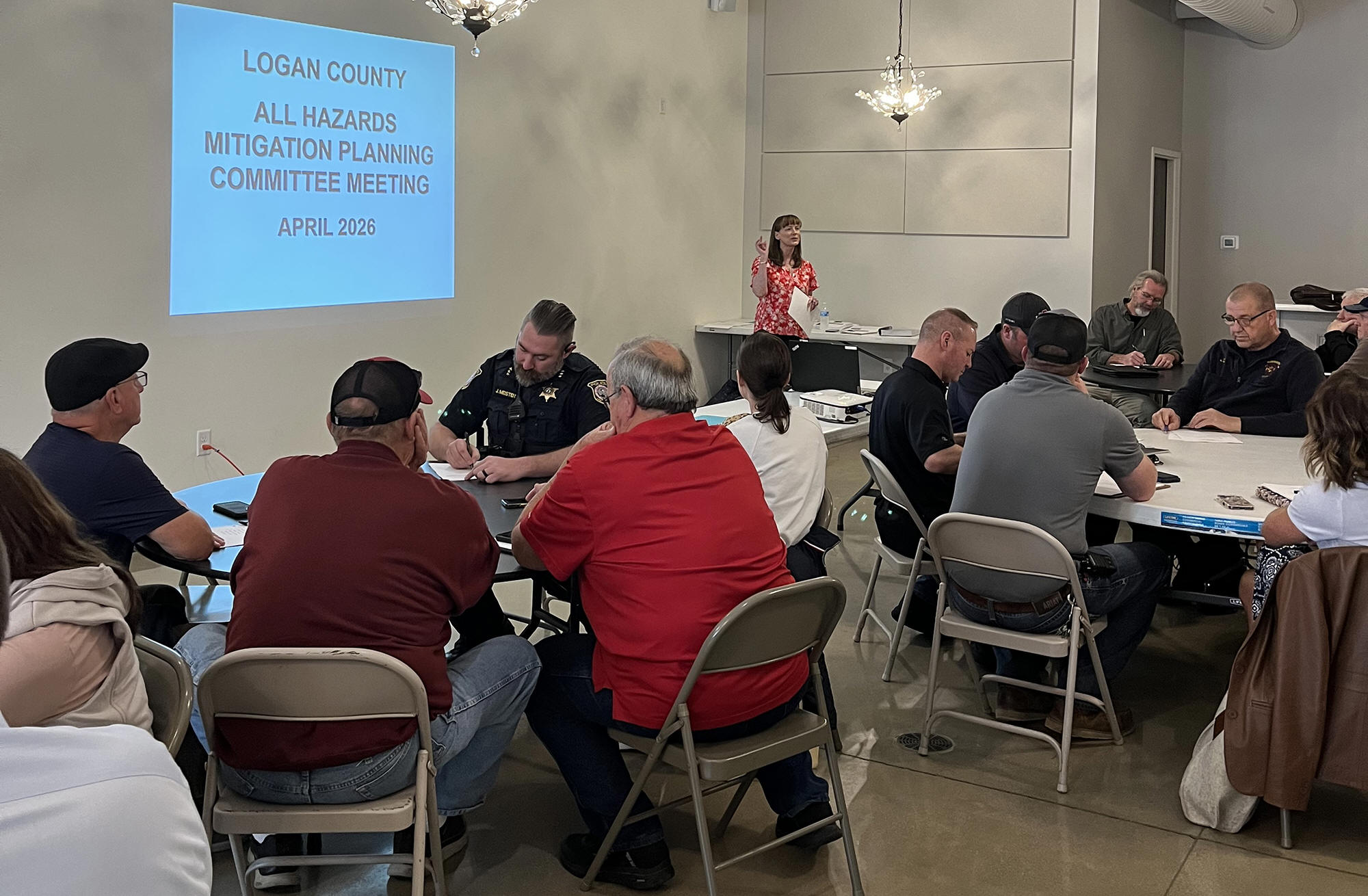
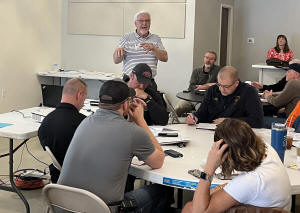
On Thursday, April 2nd, members
of the Logan County community met at the Boardroom on Lincoln for an
All Hazards Mitigation Planning Committee (AHMPC) meeting at 10:00
a.m. The meeting was led by Andrea Bostwick-Campbell, Project
Manager/Risk Assessor, and Ken Runkle, Public Involvement
Specialist/Risk Assessor.
The AHMPC is a committee composed of representatives from different
“public entities,” such as school districts, cities, county
departments, etc. Campbell and Runkle explained that the purpose of
the AHMPC is to help formulate plans for communities around the
county in an effort to mitigate damage in the case of natural or
man-made disasters. The slideshow presented had examples of these
disasters listed including severe summer/winter storms, floods,
tornadoes, waste disposal, hazmat incidents, and many others.
In addition to being prepared, Campbell and Runkle stated that
participating public entities also get to apply for funds from the
Federal Emergency Management Agency (FEMA). To be named in the
county plan and be eligible for these funds, entities must
participate in the meetings. Businesses are not considered public
entities and are not able to be named in the plan.
Campbell and Runkle shared that there was a plan put in place back
in 2020 that needed to be updated. Many of the previous public
entities that participated returned or reached out to share interest
in participation if they could not attend the first meeting. The
pair shared that the meeting is the first of four to five total.
Campbell and Runkle shared some weather and financial data to help
drive home the benefits of participating in the AHMPC. According to
the presentation, $115 billion in damages were claimed in 2025 from
only 23 severe weather events. Last year, 2025, was the “3rd highest
total number of billion-dollar events recorded,” as well as the 6th
highest year for total losses recorded. This data has been kept
tracked since 1980.
The pair showed heavy rainfall data
from both Lincoln and Mt Pulaski, with data from the former being
kept track of since 1906 and the latter since 1893. Campbell and
Runkle showed the top ten heavy rain events for each location,
taking time to note how many for each occurred within the last
thirty years. For Lincoln, that number was four, and Mt Pulaski was
six.

[to top of second column] |

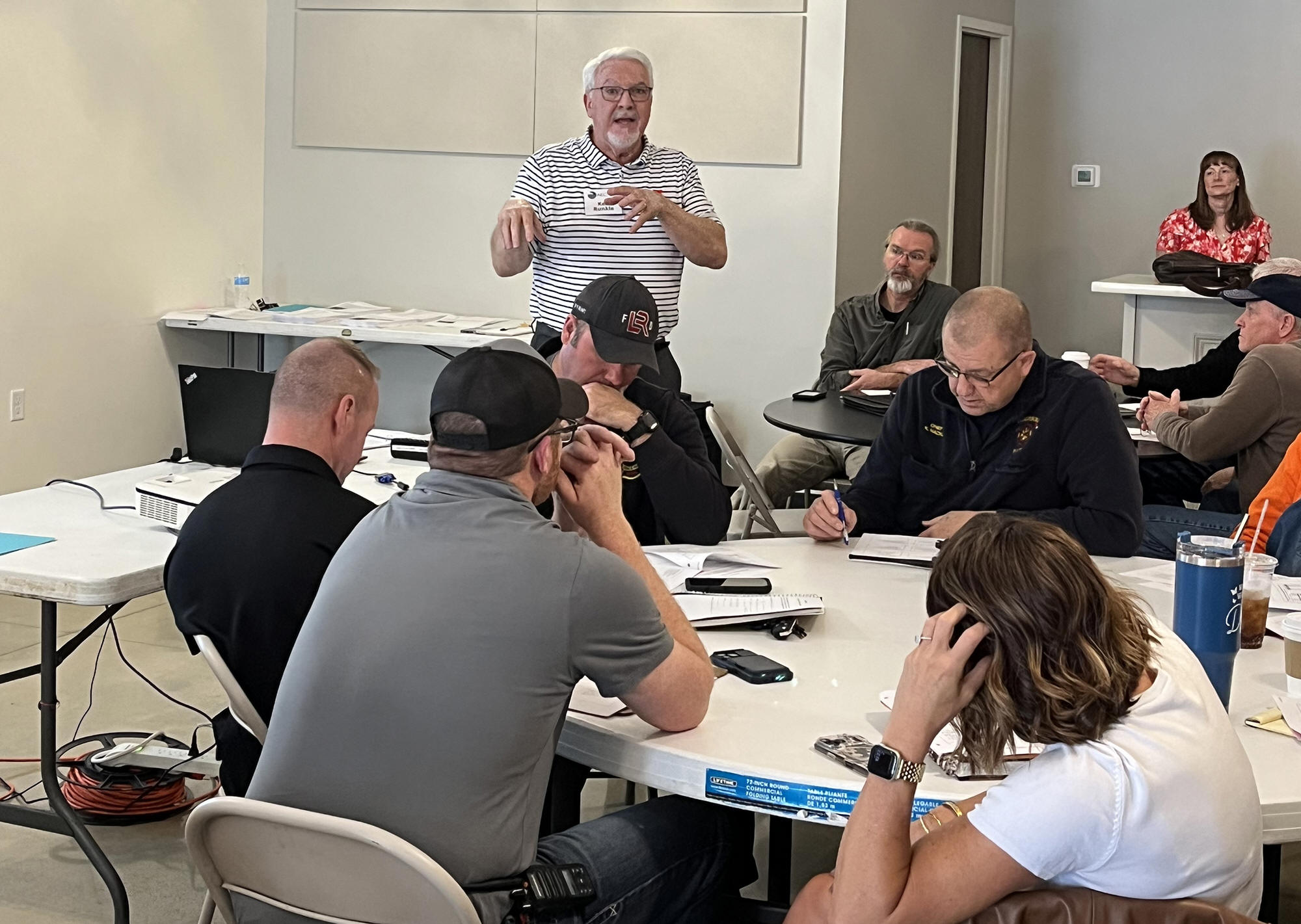
Runkle was sure to point out that
simply participating in the meetings and getting added to the plan
did not guarantee the public entity to FEMA funds. Rather, they
would have to apply for FEMA funds themselves if and when a disaster
event occurred. He used the example of a county fair, stating that
buying a ticket to get into the fair does not guarantee him access
to any of the rides. Campbell and Runkle also clarified that any
projects a public entity would want funds for would need to be named
in the plan. If it is not on the list, no funding can be acquired
for it.
Once the presentation was finished and all the different forms that
would need to be filled out were discussed, there was time for
questions from those in attendance. There were only two questions.
The first was whether the Salvation Army would qualify as a public
entity. Campbell stated that they would not qualify themselves, but
due to the nature of their work, they could be named in the plan of
a larger entity, such as a city.
The second question was regarding the city of Lincoln and their
denial of aid funds in the past. The person asking the question
stated that the city of Lincoln has never run a deficit, and when it
has come to applying for aid in the past, they were always “punished
for fiscal responsibility.” Campbell assured them that the amount of
money a public entity has should not come into play when being
considered for funding from FEMA.
Once the meeting ended, Campbell and Runkle shared that the next
meeting would be on Thursday, July 16th. The main topic of this
meeting will be risk assessment.
[Matt Boutcher] |