|
Russel Allen Garden Day provides
practical education for gardeners
[March 26, 2026]
Garden enthusiasts gathered at
the Oasis Senior Center in Lincoln on Saturday for the annual Russel
Allen Garden Day organized and presented by the Logan County Master
Gardeners. Every year the Logan County Master Gardeners prepare
practical workshops with the latest expert horticultural information
and invite a main speaker to present on specialist garden topics.
Registration and light refreshments began at 8 a.m. and the first
workshops started at 9 a.m. with a choice of “Tool Time for the Home
Gardener” by award-winning horticulturist Lisa Wrage or “Terrific
Trees” by U of I Extension Educator Jennifer Fishburn. The next
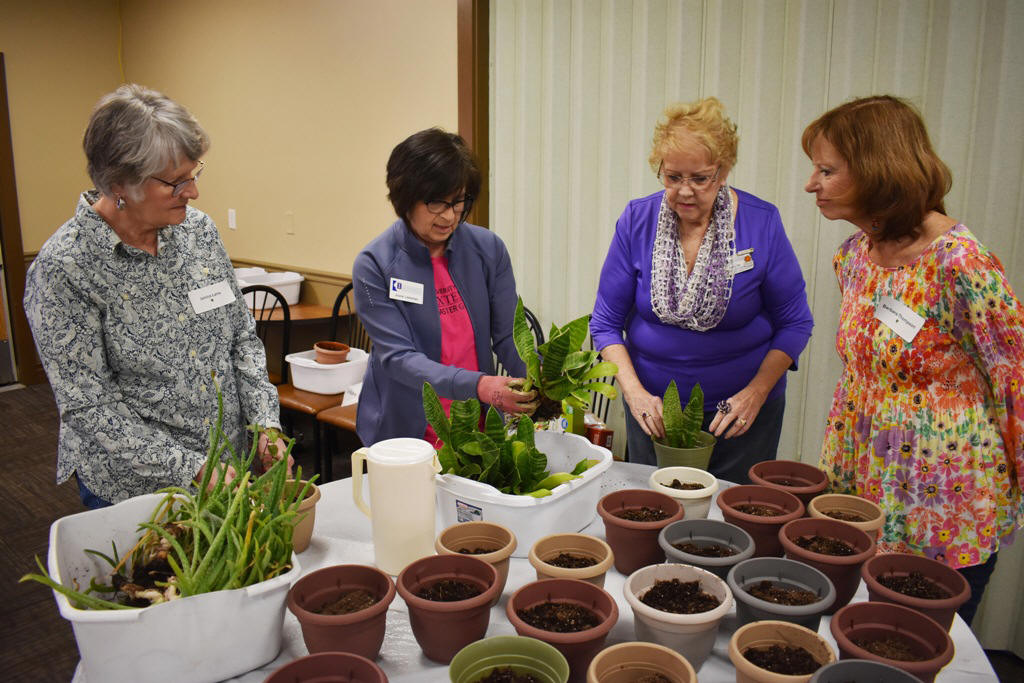
workshop, “Houseplants 101,” was for all participants and included
both informational and hands-on portions. Jennifer Fishburn
presented the first half of this workshop in best practices for
general care of house plants, and Master Gardener Debra Aper taught
the second half about how to separate and propagate overgrown house
plants. Participants were then able to choose from African violet,
aloe vera, snake plant, spider plant, and others to create starts of
their own to take home. The main session followed the workshops and
was entitled “Managing Pests without (or fewer) Pesticides”
presented by Ken Johnson, U of I Extension Horticulture Educator.
During the Houseplants 101 workshop, Jennifer Fishburn offered
advice for growing healthy indoor plants. For optimal growing
conditions select plants with the growing location in mind because
light intensity is the most limiting factor for house plants. A
well-lit window is best, preferably south-facing. Plant owners
should consider factors about the window such as how clean it is,
whether it is tinted, and if there are blinds, drapes, or shades.
Also consider the variations of light throughout the year. Rotate
the plant a quarter turn with each watering so that it grows evenly,
rather than reaching toward one direction for the light.

When purchasing house plants, avoid
plants with yellow or chlorotic (chlorine-damaged) leaves, brown
leaf margins, spots, or blotches. Water when the plant pot feels
lightweight or when the potting media is dry one inch depth. Room
temperature water is best for watering. If using tap water, let it
sit out for 24 hours to allow the chlorine to evaporate. Don’t use
soft water because it contains too much salt for a house plant. Some
plants, such as African violets, prefer to be watered from the
bottom.

[to top of second column] |

What about mixed
planters? These are usually given as gifts with different
species of plants planted in the same container. The problem is
that the plants do not necessarily require the same growing
conditions. Another problem is that often there is no drainage
hole in the bottom of the decorative pot. It’s best to separate
these plants and repot them in their own pots. Learn the
conditions and moisture requirements for each plant. For
example, peace lilies hate plant shine, a coating applied to
leaves to make them shinier. It is best to clean big leaves with
a damp paper towel to remove dust in order to allow maximum
light absorption.
When repotting house plants, only go
up one pot size. Repot when the plant is rootbound or when roots are
coming through the drainage hole. Water the plant the day before
when repotting. If reusing a pot, use a solution of one part bleach
to nine parts water to clean pots for reuse.
For propagating new house plants from existing ones, the method
depends on the plant itself. Some propagate from cuttings of stems
and leaves, others from dividing, and others from layering or air
layering. When rooting cuttings in water, transfer to potting media
as soon as roots appear. Alternatively, plant the cutting in media
in a small pot and place it in a gallon sealed plastic baggie for a
few weeks to create a mini-greenhouse to promote root growth.
As a final tip for successfully transplanting and starting new house
plants, Fishburn strongly recommended not to use potting soil
straight from the bag, but to moisten it first. Plant and then water
again. Be sure that the media used is labeled potting soil and not
garden soil. For more information about caring for house plants
including common individual species, click
here. For
additional gardening information, including more from the Russel
Allen Garden Day, look for LDN’s spring Home and Garden magazine in
April.
[Stephanie Hall]
|