|
Hut 8 holds informational meeting
on proposed Logan County data center
[February 06, 2026]
On Wednesday, February 4th, an
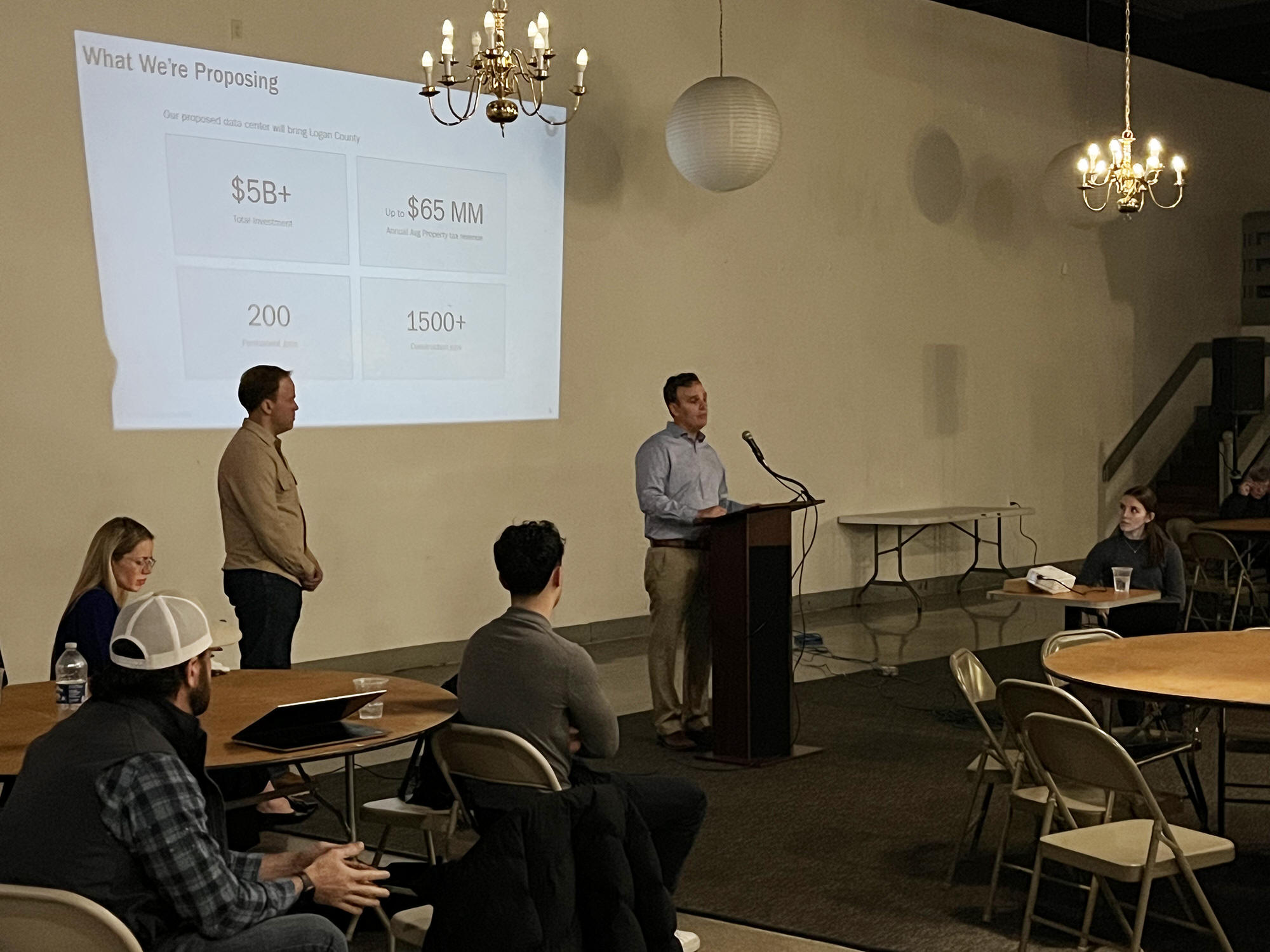
informational meeting was held by Hut 8 at the Lincoln Banquet
Center in Lincoln. The meeting was held to provide an update on the
proposed data center, as well as address community concerns since
Hut 8’s initial presentation to the Zoning and Economic Development
Committee in January. Five representatives from Hut 8 were present
to give the presentation and answer questions. Pizza was also served
for all in attendance.
The representatives present
included Peter Gouhausen and Greg Irwin, the two Hut 8
representatives that gave the initial presentation in January, as
well as three other representatives who were introduced as Gautier,
Sue, and Andrew. Sue started the presentation by informing the
audience that they were listening to the community and are working
to address the concerns they have with the data center.
The representatives started with an overview of the project to
remind everyone present of the exact details. Goehausen stated that
they had been speaking with a lot of local community leaders over
the last month. He stated he is hoping the data center could
diversify some of the tax revenue that Logan County is generating.
He spoke on how he has been hearing that a lot of people have been
leaving Lincoln and Logan County and getting jobs in other counties,
stating that he hoped the data center could be a “pathway to help
bring some of [the people and jobs] back.” He stated that the data
center could double or triple the tax revenue the county is
currently generating.
Goehausen continued, stating that they had signed an agreement with
union organizations to use local labor in the building process of
the data center itself, should it be approved. He stated that, in
discussions leading up to this agreement, they learned that there
are 500-600 union workers in the county, all of whom would be chosen
for jobs before laborers outside the county.
Next, Goehausen addressed that he
understands the way the tax money would be distributed would be
unfair to the people of Latham, but they have some ideas about that.
He stated that Hut 8 is looking for ways to help distribute some of
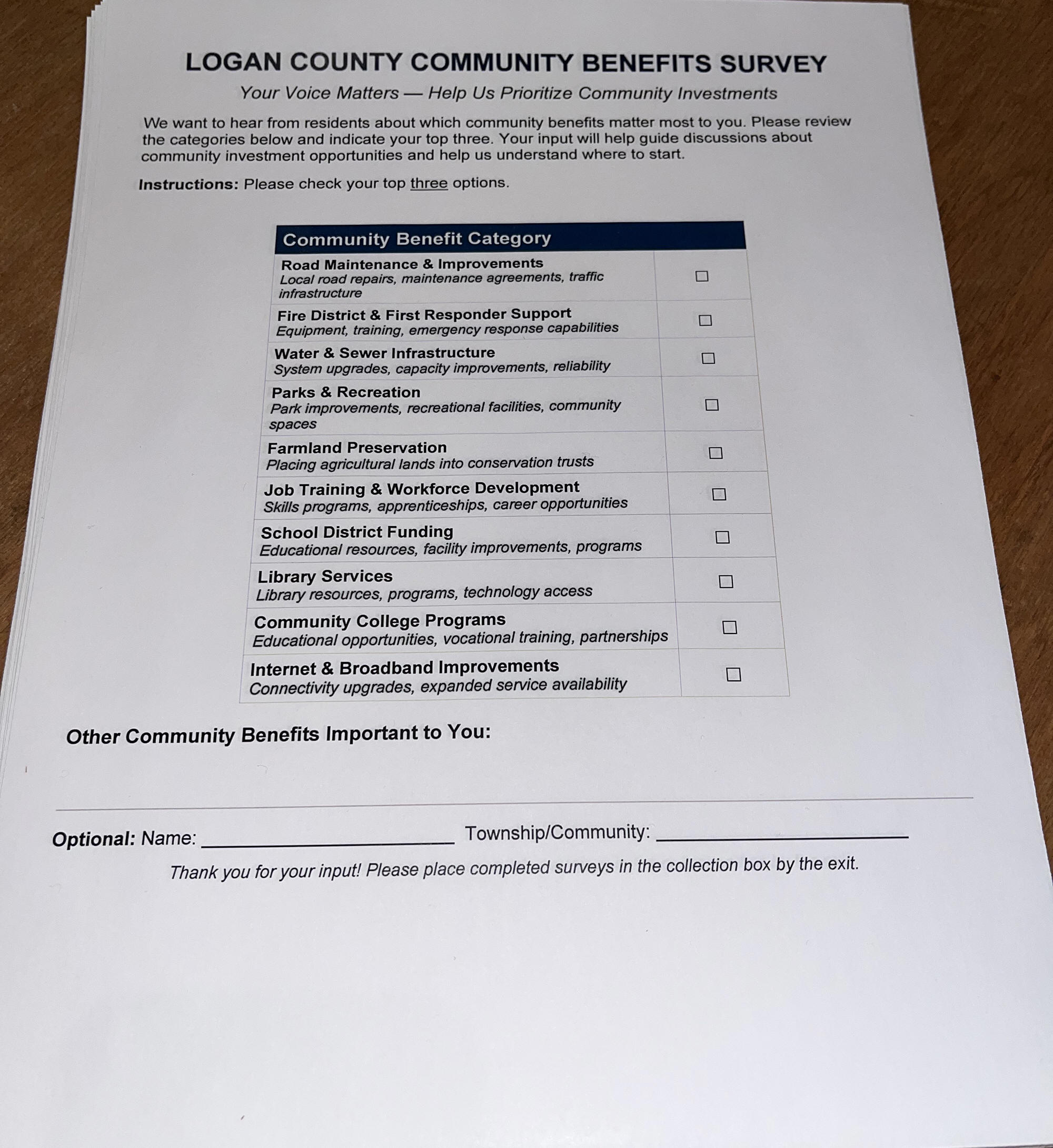
the tax money to other parts of the county. They brought a community
benefit survey to get an understanding of issues that are important
to the people of Logan County. He stated that they had spoken to the
volunteer fire department in Latham and were looking for ways to
help them.

Next, concerns from the last month
were addressed, with Hut 8 representatives giving answers to those
issues. The first was the concern that electricity rates will rise
as a result of a data center in Logan County. Before getting into
this issue, however, they explained why Logan County was chosen over
other areas. They stated that they chose Central Illinois over an
area like Chicago due to the demand for power. In Central Illinois,
the demand for power is much lower than in Chicago. Logan County
also has a high voltage substation right outside of Latham that has,
according to what Hut 8 states they were told by Ameren, more than
enough power for the county and a data center.
The representatives also repeated that they were going to pay for
one hundred percent of the upgrades needed to get the required
amount of power from the substation to their facility. This,
something LDN reported as a leading cause of rising power bills in
areas near data centers, should not raise electric rates, according
to Hut 8. They stated that Ameren increases fees on power bills to
local customers for infrastructure if there is a large amount of
money they spend on upgrades. Since Hut 8 states they are going to
pay for these upgrades, this item should not increase.
[to top of second column] |

The Hut 8
representatives also stated that they are not going to be
getting their power from the same provider that Logan County
does. They are going to sign a power purchase agreement with the
Midcontinent Independent System Operator (MISO). They continued,
stating that they want new power, not the power that the county
gets. The
second concern that was addressed had to do with the reliability of
the grid. In the last few County Board meetings where the proposed
data center was discussed, concerned residents shared that Ameren
asked people to lower their power usage during the most recent cold
snap due to the strain on the electrical grid. They further conveyed
doubt that a 500-megawatt data center could exist on the same grid
as the rest of the county and not cause significant outages,
especially during peak usage times.
Ameren did a system impact study, the representatives stated, which
found that the grid could handle both the proposed data center as
well as the power demands of the rest of the county. MISO is also
conducting more studies to make sure that no service will be
interrupted.

The third concern that was addressed
was the speed at which the data center is moving. The
representatives stated that they must move fairly quickly due to the
time frame that Ameren gives them to agree to pay for the updates to
the grid. They stated that Ameren gives them 45 days to pay once
everything on Ameren’s end is in order and an agreement is made.
They would not want to pay for the upgrades if they did not end up
building the facility.
The next issue addressed was about water usage, and specifically the
Mahomet Aquifer. “We have no plans to touch the [Mahomet] Aquifer,”
they said. They stated that they will be working with industrial
water providers to have water brought in for their closed loop
cooling system. This water, due to it being a closed loop, will need
to be replaced about every four to seven years. Aside from this
water, the rest of the water being used will be standard use water,
such as sinks and toilets. They stated that, because they expect to
have about fifty employees working at any given time, the data
center should not use more than what would be used in a fifty-person
office building.
The final issue they addressed was the noise, something that people
from Latham were very concerned about. They stated that the
A-weighted decibel (dBA) level of the facility should be 65 or less.
According to the American Speech-Language-Hearing Association (ASLHA),
60 dBAs would be about how loud a typical conversation, dishwasher,
or clothes dryer would be. The representatives stated that the
facility should be 35 dBA or lower, which according to them would be
less than a whisper. The ALSHA states that 40 dBA should be the
approximate noise level of a “quiet room.” They additionally stated
that they are putting in sound walls to make sure the sound levels
are not too high.
Hut 8 stated that they were willing to sign a conditional use permit
that would set maximum levels for their noise. This way, if they
were to break that conditional use agreement, they would receive
fines and consequences from the county. They also stated that a
conditional use permit would lock them into making a data center.
That way, they could not drop their plans and make an “amusement
park” instead. They also mentioned having a decommissioning bond so
that, should the facility not be used, it could be torn down and the
land restored “to current condition.”
The next thing the representatives did was host a Q & A section
where Sue would ask questions that the other members would answer.
They started with a question about paying 100 percent of the
infrastructure costs. This Q & A did not last long, however, as
someone from the audience raised their hand for their own question
and were called upon. What followed was an hour and a half of
community questions and comments. To read more about these questions
and comments, as well as how they were answered, please read LDN’s
Saturday addition for the second part of this story.
 |